73 earthquakes recorded in Spain regional monitoring zone
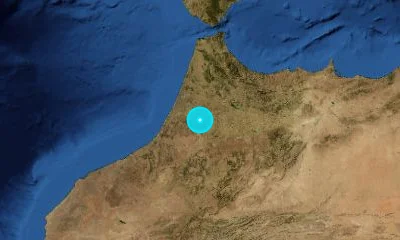
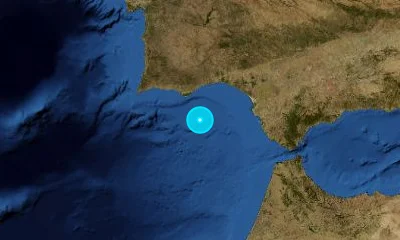
Real-Time Earthquakes in Spain
Continuous seismic tracking along the Iberian Peninsula, Betics, Pyrenees, and Alboran Sea.
Recent Earthquakes in Spain
LIVELive telemetry feed and seismic report for earthquakes in Spain.
Active Fault Systems & Tectonic Setting
Geodynamic boundaries, subduction dynamics, and crustal deformation zones.
Spain is located along the diffuse convergence zone between the Eurasian and African plates. Seismic activity is concentrated in the Betic Cordillera, the Alboran Sea, the Pyrenees, and the Canary Islands volcanic zone, monitored in real time by the Instituto Geográfico Nacional (IGN).
Alhama de Murcia Fault (FAM)
Left-Lateral Oblique ReverseActive fault in the Eastern Betic Shear Zone; source of the 2011 Lorca earthquake.
Carboneras Fault
Sinistral Strike-Slip50 km transpressional fault extending from southeastern Spain into the Alboran Sea.
North Pyrenean Fault Zone
Thrust & Strike-Slip SutureAncient suture zone between the Iberian and European plates producing moderate seismic events.
Landmark & Historical Earthquakes
Significant seismic benchmarks, cataloged magnitudes, and geological impacts.
Gulf of Cadiz, Atlantic
November 1, 1755Great Lisbon Earthquake; offshore rupture produced massive tsunami waves that swept the coasts of Cadiz and Huelva.
Arenas del Rey, Granada
December 25, 1884Great Andalusian earthquake; heavily damaged villages across Granada and Malaga with over 1,000 casualties.
Lorca, Murcia
May 11, 2011Extremely shallow rupture (1–2 km depth) on the Alhama de Murcia fault producing destructive peak accelerations in Lorca.
Frequently Asked Questions
Common questions about seismic activity, safety, and monitoring in Spain.
Which regions in Spain have the highest seismic risk?▾
Southern and southeastern Spain—especially Andalusia (Granada, Almería, Málaga), Murcia, and the southern Valencian Community—experience the highest seismic hazard, followed by the Pyrenean border.
Can tsunamis hit the coast of Spain?▾
Yes. Major offshore earthquakes in the Gulf of Cadiz (like the 1755 Lisbon event) or underwater landslides in the Alboran Sea can generate tsunamis that reach the Spanish coastline in 20 to 60 minutes.
What causes volcanic earthquakes in the Canary Islands?▾
The Canary Islands are volcanic hotspot islands where magma migrating through the oceanic crust fractures surrounding basalt rock, producing intense seismic swarms (as observed during the 2021 Cumbre Vieja eruption on La Palma).